The story was reported in collaboration with BIRN Albania, the Czech Center for Investigative Journalism, the Crime and Corruption Reporting Network (KRIK), and NOVA TV.
Czech President Miloš Zeman likes to joke about shooting journalists.
The veteran politician, who is running for reelection this week, recently earned international opprobrium when sporting a faux assault rifle, he figuratively took aim at the press.

As it turns out, if Zeman ever wants to make good on his threats, his chief financial backer may have plenty of bullets handy.
An investigation by the Organized Crime and Corruption Reporting Project (OCCRP) and partners reveals that companies linked to Jaroslav Strnad, Zeman’s main campaign financier, have been on a secretive, years-long Balkan shopping spree, aided in part by controversial local figures, one of whom has been investigated for criminal activity.
The purchases include the importation into the Czech Republic of tens of millions of rounds of old Chinese-made ammunition from stockpiles in Albania.
The acquisitions also include aging arms factories, bought from bankrupt companies at knock-down prices. In recent years, the Czech tycoon’s firms bought a troubled Macedonian ammunition factory and, more recently, a plant that produces military components in neighboring Serbia.
Strnad’s dealings have also involved at least two figures linked to Sašo Mijalkov, a powerful former Macedonian spy chief currently on trial for illegal wiretapping, election fraud, and torture.
The Czech buy-up goes beyond Strnad. The STV Group, another Czech firm led by businessman Martin Drda, also bought more than 30 million rounds from Albanian stockpiles.
It is uncertain why companies controlled by Strnad and Drda made the purchases.
But Strnad built his reputation and his fortune in the Czech Republic and Slovakia as an arms supplier and producer, suggesting that his goal may be to re-sell the arms at a profit.
The question is: To whom?
The decades-old Chinese ammunition he purchased is both dirt-cheap and believed to be extremely unreliable – making it very difficult to sell on legal international markets. NATO member states, including the Czech Republic, do not use such munitions. The United States has banned the import of Chinese ammunition since the 1989 Tiananmen Square massacre.
The Albanian ammunition stockpiles have gained a measure of notoriety. The 2016 Hollywood film War Dogs was based on a spectacularly botched effort by two 20-something American arms dealers to repackage and illegally sell such ammunition to the US government.

In response to reporters’ inquiries, a representative for Strnad’s companies confirmed their purchase of munitions “of Chinese and Russian production” from Albania, disputed the assertion that it may be unreliable, and insisted that “most of this ammunition was sold to customers within the European Union.”
But arms experts consulted by reporters were skeptical.
“[This] response does not seem credible to me,” said Georges Berghezan, a researcher for the Group for Research and Information on Peace and Security (GRIP).
“The field of customers [for military ammunition] in the private sector is rather limited in the EU,” he said. “And I don’t imagine public security forces in any EU country equipping [themselves] with such Soviet-style and elderly ammunition.”
Asked where such ammunition could be exported to, Pieter D. Wezeman, senior researcher at the Stockholm International Peace Research Institute (SIPRI), suggested “Africa, I’d say potentially parts of the Middle East, places like Iraq, or maybe Afghanistan.”
Representatives of STV Group declined to respond to reporters’ questions.
Brothers in Arms
Strnad enjoys a close relationship with President Zeman and is far and away his largest campaign contributor. The 45-year-old owns a slew of companies, many under his Czechoslovak Group (CSG), with interests that include transport, manufacturing, and weapons. Strnad is an owner of Tatra Trucks, one of the world’s oldest vehicle manufacturers.
Public disclosures show that one of the businessman’s firms, DAKO-CZ, has contributed a total of 2 million koruna (US$ 92,160) towards Zeman’s current campaign for re-election. Another Strnad-linked firm, Composite Components, is Zeman’s second-largest donor, giving 1 million koruna. Between them, the two firms make up two-thirds of all contributions to Zeman’s campaign.
Zeman, a Euroskeptic who has cultivated warm relations with Moscow and Beijing, came in first with 39 percent of the vote in the first round of the Czech presidential election on January 12 and 13. He will face the pro-European Jiří Drahoš, a former professor of chemical engineering, in second-round voting on January 26 and 27.
Strnad’s generosity has been matched by access to the outspoken president. Zeman has publicly boosted the Czech defense industry and visited one of Strnad’s firms, Excalibur Army, last March. Strnad flew to Russia with Zeman as part of a business delegation last November, returning with a contract to build and operate an aircraft maintenance hangar in Ulyanovsk.

Zeman has also publicly scorned his own country’s arms control rules, complaining that measures that ban the export of weapons to countries from which they could be re-exported into conflict zones were choking off business.
Efforts at control “in a totally inappropriate way restricts our export to non-embargoed countries on the pretext that there is a risk of re-exporting to countries no longer as safe,” Zeman said last May.
According to Wezeman, the arms expert from SIPRI, the Czech Republic does export large amounts of arms to countries like Iraq, Saudi Arabia, and Nigeria.
Reporters have found no evidence that those countries – or any other potentially sensitive destinations – are the intended recipients of the ammunition the Czech businessmen purchased in Albania. Their ultimate purpose is – thus far – unknown.
But the fact that these purchases took place at all – far from the public eye until now – reveals the secrecy that can still surround major arms deals in the heart of Europe.
Made in China: How Czech Companies Bought Tens of Millions of Rounds of Old Ammunition

In 2008, an attempt to decommission part of Albania’s aging, deadly stockpile of Cold War-era munitions went horribly wrong.
At about noon on March 15, a series of explosions at a facility in the village of Gërdec sent fireballs into the sky, artillery shells into homes, and shockwaves slamming into the nearby capital, Tirana. The disaster killed at least 26 people.
But Albania’s tragedy turned out to be a business opportunity for two rival Czech companies.
Interviews and documents obtained by OCCRP show that, by prompting the Albanian government to unload its dangerous Communist-era munitions, the catastrophe opened the way for Czech companies Real Trade Praha and STV Group, controlled by arms tycoons Jaroslav Strnad and Martin Drda, to move in on the country’s dirt-cheap but unstable stockpiles.
Between 2010 and 2015, Real Trade Praha – the Strnad-linked firm – and the Drda-controlled STV Group bought tens of millions of rounds of old Chinese munitions between them, according to internal documents from Albania’s state-owned Military Export Import Company (MEICO).
The documents also show that over 100 tons of RDX, an explosive, was sold from Albanian stockpiles to buyers in the Czech Republic, in spite of alarm by US diplomats over the instability of the material.
The ammunitions purchases raise questions about what the firms did with their tens of millions of rounds. Decrepit and unreliable, Chinese ammunition of the sort kept in Albanian stockpiles is difficult to sell on the international market. It is not used by NATO member states’ armies, including that of the Czech Republic. But, along with old Czech rounds, decades-old Chinese ammunition frequently makes its way onto battlefields in Africa and the Middle East.
“There will not be any interest from the military or police side [in Europe],” said Pieter D. Wezeman, senior researcher at the Stockholm International Peace Research Institute (SIPRI). “I can’t imagine that at all.”
Instead, he said, typical purchasers of such ammunition might be “countries [that] have relatively little money to spend which are in urgent need because they have a conflict ongoing and which have a procurement system which is not functioning particularly well.”
Georges Berghezan, a researcher for the Group for Research and Information on Peace and Security (GRIP), said it was likely that “the Czech firms re-exported the Chinese-Albanian ammunition to third parties and that the ammo finally ended up in the hands of Syrian rebels, Iraqi Kurds or central government forces, or Afghan security forces.”
“Yemen or an impoverished and conflict-ridden African country, like South Sudan, could also be a possible destination.”
A separate set of leaked emails obtained by reporters throw more light on Real Trade’s deals. They show that, in seeking to smooth the movement of one shipment, the company sought help from Petar Crnogorac, a Serbian businessman previously investigated for attempting to sell weapons to Islamist fighters in Libya.
“I Was Happy to Sign”
The MEICO documents reveal specific details about nine deals the Albanian arms exporter made with the Czech companies.
They show that, between 2010 and 2015, MEICO sold a total of over 81 million rounds of ammunition – most of it Chinese-made and mostly of types used for Soviet-style rifles and machine guns – to the Czech Republic. It also sold 358 mortar rounds and nearly 110 tons of RDX explosive.
Of the 81 million rounds, Real Trade Praha, a firm from Strnad’s portfolio, imported nearly 34 million in various calibers (as well as the 358 mortar rounds). Drda’s rival STV Group imported about another 31 million rounds of 7.62×39 mm ammunition, the type used in AK-47 assault rifles and other Soviet-style guns. These cost a total of $920,160 – about three cents per round.
The remaining rounds – nearly 17 million – were also sold by MEICO to the Czech Republic, but it is not clear which company bought them.
The potential sale of the RDX explosive was being carefully watched by US diplomats in Albania as early as 2009, according to a State Department cable from July that year released by WikiLeaks.
US officials had asked Albanian authorities to destroy – and not export – its stockpile of 150 tons of RDX following the Gërdec disaster, according to the cable. (The RDX had been stored at a separate site.) However, the cable notes that US diplomats had already heard rumors that an unnamed Czech company had attempted buy the explosives.
The MEICO documents obtained by OCCRP show that nearly 110 tons of the RDX was sold in 2010. They do not show which company bought the explosives, indicating only that the Czech Republic was the final destination.
After the deadly Gërdec explosion, a new director, Granit Leka, was brought in to head MEICO. He quickly made clear that he wanted to sell off Albania’s dangerous stockpiles.
Leka confirmed to OCCRP that MEICO had sold ammunition to Czech companies.
“I was happy to sign contracts with companies from an EU country, with end user certificates,” Leka said. “We signed the contracts immediately because they made us good offers.”
“According to the contracts, it was the Czech companies who managed transportation [of the munitions from Albania].”

“Who Would Buy This Stuff?”
It is unclear just what the Czech companies did with the ammunition they purchased.
One thing is certain: The companies didn’t sell it to the Czech military. In response to questions, a spokesman said that the country’s armed forces were focused on NATO standards and do not use Chinese weapons or ammunition.
Representatives of Strnad’s companies confirmed that “companies from the Czechoslovak Group buy redundant ammunition, weapons, military equipment or spare parts in various European countries, including Albania,” and insisted that most of the purchases was sold to EU customers.
Representatives of STV Group declined to respond to reporters’ questions.
Arms experts consulted by reporters expressed skepticism that the ammunition would find European buyers, citing its age, type, and likely poor condition.
“I am sure that [much] of the lot is unusable, which explains its very low price,” Berghezan said.
One source with inside knowledge of Real Trade’s initial 2010 deal, who declined to be named because he feared retribution, said that the ammunition was likely intended for resale in conflict zones, particularly in Africa. He did not provide additional documentation to back up his claim.
“The particular ammo you are asking about, think about it… who would buy this stuff? Not an army, not the Americans, not the Russians,” the source said.
“From a box of 100 bullets, maybe 30 or 10 won’t work at all, who can know with that kind of shitty ammunition. But armed civilians and gangs in Africa won’t care.”
Wezeman, the SIPRI arms researcher, said that the Czech exporters would face few legal obstacles exporting the ammunition to most countries or armed groups as long as they received permission from the Czech government.
“The chances that they will get permission to export, I’d say, are quite high, there are very few places which they can’t export to,” he said.
As possible exceptions, he named countries under EU or UN embargoes, such as South Sudan, Sudan, and Iran.
A representative of Real Trade said, “CSG Group companies adhere to all national and international rules governing the trading of military equipment. All exports are therefore made on the basis of valid end-user licenses.”

“STRICTLY CONFIDENTIAL!!!”
A set of leaked emails from Strnad’s employees that were obtained by OCCRP and partners shed further light on his Balkan deals.
The emails, sent to potential business partners in other Balkan countries, indicate that his firms were looking to buy more ammunition elsewhere, this time not of Chinese manufacture. They confirm that Strnad was personally in the loop on the business. And they reveal that one of his executives was in touch with a notorious Serbian arms dealer accused of various crimes.
In a March 2010 email from Real Trade executive Petr Rusek to a Macedonian business partner – bearing the warning “STRICTLY CONFIDENTIAL!!!” – Rusek disclosed his firm’s first contract to buy Chinese-made ammunition from the Albanian MEICO. He then explains that he’s looking for additional ammunition, in various calibers, specifying that most of it must be manufactured elsewhere (“no China”).
The email was cc’d to Strnad and another of his executives.
In a separate email, Rusek asks a Serbian man he addresses as “Mr. Trninic” for help ensuring the safe transit of one truckload of the ammunition through Serbia. The email notes that arrangements had already been made for transit through Macedonia and Hungary, confirming the land route that appears in the MEICO paperwork.
The truck, which was slated to make the trip in late January, would likely be the first of many, Rusek wrote.
Rusek also told Trninic that he had been referred to him by Petar Crnogorac, the owner of Serbian arms firm CPR Impex.
Crnogorac has faced multiple accusations of bending and breaking the law. A previous investigation by OCCRP and partners found that CPR Impex had acted as a middleman to sell European arms to Saudi Arabia that likely ended up with Syrian rebels.
In 2014, Crnogorac was arrested in Serbia on charges that he had obtained inside information on military surplus tenders; the charges were later dropped.
A UN panel in 2015 investigated a CPR Impex subsidiary over accusations that it had sold weapons to Islamists in Libya. Crnogorac has confirmed that discussions were held on exporting weapons to Libya, but said the deal never went ahead.
The UN panel reported in 2016 that the Montenegrin and Serbian governments had informed them they had received no requests for arms exports to Libya.
Crnogorac declined a request for comment.
Strnad’s Balkan Factory Buy-Up

Czech arms tycoon Jaroslav Strnad did not limit his Balkan shopping spree to stockpiled Chinese munitions.
The businessman also bought at least two bankrupt, formerly state-owned factories in the former Yugoslavia, both of which are linked to the arms industry.
He made the first of those purchases, the Suvenir ammunition factory in the Macedonian village of Samokov, in 2010. He bought the second, the 14. Oktobar factory in the Serbian city of Kruševac, last year.

Strnad’s dealings in both countries have involved figures linked to a clique of politicians and security officials accused of running a mafia state under Macedonia’s previous government.
In both deals, Strnad’s firms snapped up the factories at rock-bottom prices.
Behind the scenes, the Macedonian acquisition has raised fears among senior local officials that the Czech businessman may have been more interested in gaining a sought-after export license than in actual production.
“The Czechs were only interested in having a Macedonian license,” said one party to the original purchase, who spoke to OCCRP on condition of anonymity because of fear of repercussions.
Macedonian Conquest
Strnad’s first purchase, of the Suvenir factory in Macedonia, handed him a strategic, albeit decrepit, part of the former Yugoslavia’s once-formidable arms industry.
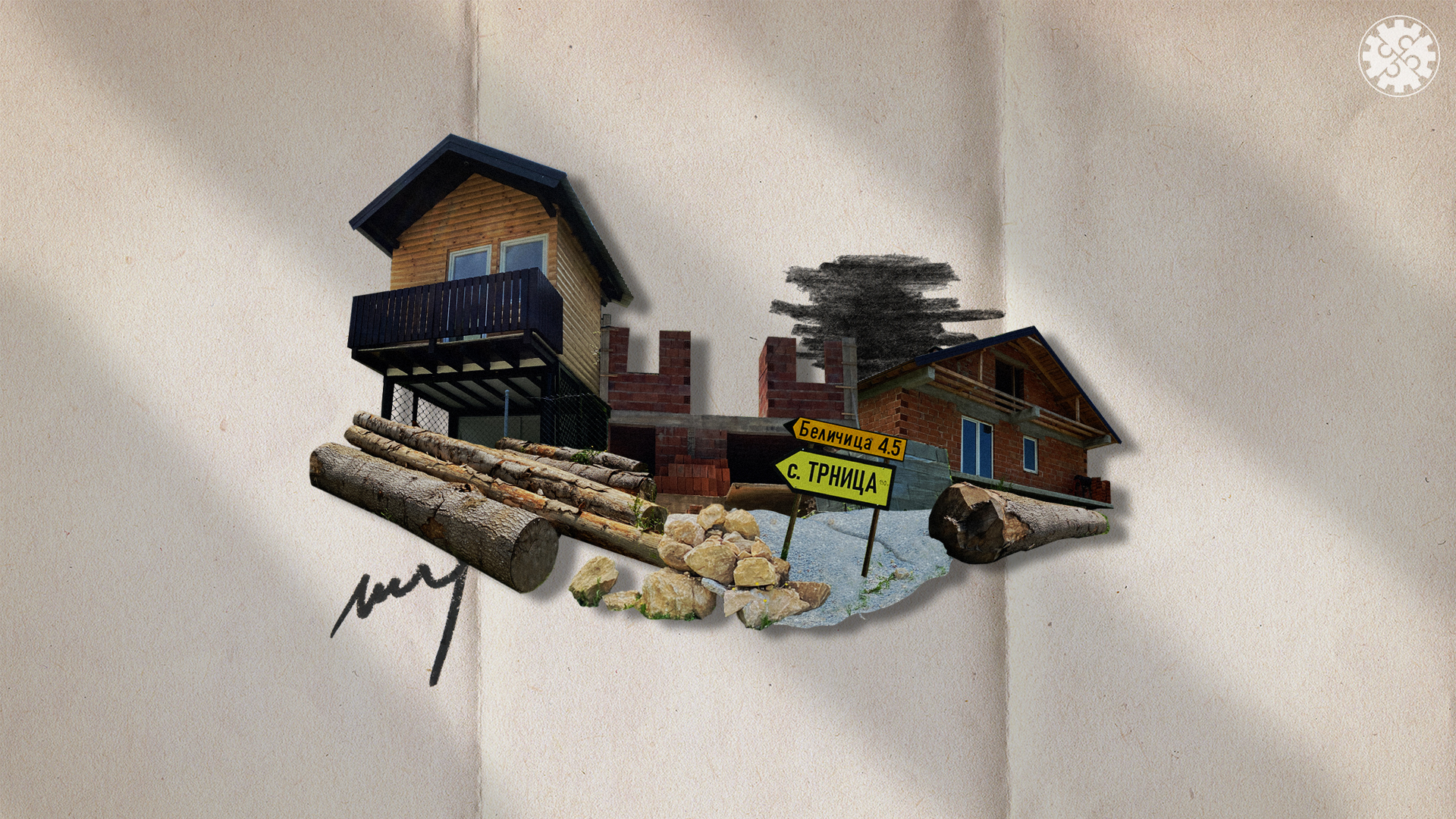
The Communist-era facility sits in a particularly poor part of the Macedonian countryside, hidden behind a rusty chain-link fence in a remote nook between wooded hills. The nearest town, Makedonski Brod, lies about 30 minutes away.
Documents obtained by OCCRP and partners show that Real Trade Praha, a firm linked to Strnad, paid just over €1 million (about $1.25 million) to the factory’s bankruptcy managers in 2010. The Macedonian firm that operates the factory, Sumbro Trade, is now owned by a Czech shell company. The website for one of Strnad’s firms, Excalibur Army, lists the Sumbro ammunition plant as one of its assets.
Accounts from factory workers, as well as customs data, indicate that the factory produced very little actual ammunition in its first five years under Czech ownership – but it may have been involved in other lines of business.
Six current and former workers at the factory who spoke to OCCRP said that ran at far below capacity, producing just a small amount of 9mm ammunition, until 2016. The workers, who had to be kept employed as a condition of the factory’s purchase, worked in staggered shifts.
Some of their tasks involved re-labeling crates that had been shipped in from elsewhere, two of the workers said.
“We were frequently repacking stuff. We were receiving, let’s say, big boxes, and we were not opening them. We were just changing labels,” said a worker who declined to be identified so as not to jeopardize his employment.
“I’m not that smart, I can’t tell you what it was or what we were doing.”
Reporters were only able to obtain export data for the factory’s operating company, Sumbro Trade, for the years 2012, 2016, and 2017.
The 2016 and 2017 data shows exports of ammunition to countries including Slovakia, the Czech Republic, and Ukraine.
The 2012 data, however, is stranger. Those figures show that the company exported an unspecified amount of bathroom and plumbing equipment to the Czech Republic. The Samokov factory does not produce such items.
In response to reporters’ questions, a representative of Real Trade Praha and other Strnad companies said that the intent of purchasing the factory was “not only to trade but also to produce.”
The company, the representative said, only uses Macedonian export licenses for the sale of small arms ammunition produced at the factory, which “is mainly exported to the USA.”
Sparavalo to the Rescue
Documents obtained by OCCRP and partners, as well as interviews with involved parties, show that, in his Macedonian business, Strnad enlisted the help of Vojislav Sparavalo, a Monaco-based businessman closely associated with Macedonia’s former ruling clique.
Previous OCCRP reporting revealed that Sparavalo jointly invested in Czech real estate with Sašo Mijalkov, the notorious former head of Macedonia’s domestic security agency, the Administration for Security and Counterintelligence (UMK).
Mijalkov, a cousin of former Macedonian Prime Minister Nikola Gruevski, was a key member of a powerful clique that ruled the Balkan country for a decade. Mijalkov’s brother, Vladimir, was appointed advisor to the director general of customs during the Gruevski government. Gruevski’s VMRO-DPMNE party lost power in 2017 after a protracted political crisis.
The former prime minister is currently on trial for corruption. Mijalkov himself is on trial for illegal wiretapping, election fraud, and torture and is expected to face trial for corruption as well.
Mijalkov’s associate, Sparavalo, proved useful to Strnad in 2015, when the failure of the Czech businessman’s factory to meet investment and hiring targets got him into trouble with the board of trustees, threatening his ownership.
On October 2, 2015, Strnad arrived with Sparavalo and one of his executives, Vít Paulíček, to the Macedonian embassy in Prague to lobby for his continued ownership of the factory, according to internal Macedonian foreign ministry correspondence seen by OCCRP.
It’s not clear whether the presence of a Mijalkov associate like Sparavalo at the meeting was decisive in ensuring that Strnad would keep his factory. But the fact that an official memo later produced by the foreign ministry on the meeting expunged Sparavalo’s name suggests that his presence there may have been a sensitive matter.
In written responses to reporters’ inquiries, both Sparavalo and a representative of Strnad’s companies denied his presence at the meeting. Both also denied any connection between Mijalkov and the Czech companies’ business in the region.
Interviews with two Macedonian officials show that Strnad was also able to enlist the help of the office of Czech President Miloš Zeman, whose staff introduced the topic of the businessman’s troubled factory onto the agenda of the president’s February 2016 meeting in Prague with his Macedonian counterpart, Gjorge Ivanov.
The topic was later dropped from the official agenda of the meeting, which was held on the sidelines of a summit of the Visegrad Group of Central European countries, the sources said, again suggesting that the topic was a sensitive one.
Jiří Ovčáček, a spokesman for Zeman, declined to address the matter directly, saying only that “the President has been supporting economic entrepreneurs from many fields for a long time.”
“A Grey Eminence”
Leaked emails obtained by OCCRP also show that Strnad received assistance on a separate matter from Kiro Šošev, another member of Mijalkov’s clique, who Gruevski’s government appointed as an advisor to the Ministry of Defense. He was serving in this position in 2010 when Strnad’s Real Trade Praha moved into the country.
In an April 2010 email, Strnad company executive Petr Rusek contacted a procurement officer of the Macedonian Ministry of Defense to arrange a visit to a Macedonian airbase to carry out maintenance on Czechoslovak-made Zlin 242 trainer aircraft.
In the email, Rusek makes clear the visit was arranged by Šošev.
According to Emil Dimitriev, the deputy defense minister at the time, Šošev was a good person to know, as his role gave him control of defense logistics. He was also widely seen as a faithful servant of Mijalkov’s network.
“He never showed up [to work]. He was doing whatever he wanted to do. I rarely saw him, and people were complaining,” Dimitriev said.
“He was pretty much a grey eminence,” he said, using a term used to refer to a powerful behind-the-scenes decision-maker.
Asked about the aircraft, a representative of Strnad’s companies wrote that, “according to my best knowledge, [the company] does not know Mr. Šošev and we have never implemented any aircraft maintenance in Skopje.”
Moving to Serbia
Strnad’s companies also made a far more recent move into neighboring Serbia, this time in a more direct partnership with Vojislav Sparavalo.
A Serbian company belonging to Strnad’s Czechoslovak Group bought the bankrupt 14. Oktobar heavy industry factory in the Serbian city of Kruševac last year.
The ceremonial takeover of the factory, which was attended by Serbian Prime Minister Ana Brnabić, was held on October 14, a date commemorating the city’s 1944 liberation from Nazi occupation.
Documents obtained by OCCRP show that Strnad’s firm bought the factory for almost $4.5 million – just ten percent of its official estimated value. His firm was the only bidder. Four previous rounds of offers had failed to attract any interested investors.
Separate documents also show that, just six weeks later, Sparavalo bought a 15 percent share of the factory from Strnad’s firm, this time at an even steeper discount. The Monaco-based businessman paid just $12,000 for his minority stake in the factory, which would have been worth $675,000 at the valuation implied by Strnad’s purchase price.
Asked about the sales, a representative of Strnad’s companies disputed reporters’ assertions that Sparavalo’s share represented a steep discount of the factory’s real value.
In his own response, Sparavalo also disputed these estimates of the factory’s value.
Aleksandra Janković, deputy director of 14. October told OCCRP that the factory currently employs over 160 people and that the management is currently coming up with an investment plan to refurbish it.
The firm does not make munitions or military equipment, but will be involved in the production of “components used by the defense industry” such as bullet jackets, Jankovi said.
“Contracts with third parties are a company secret”, she said.
Additional reporting by Aleksandra Denkovska Gocevska and Sinead Carolan.
ARCHIVE