Press "Enter" to skip to content

Roman Numeral II

IRL dismantles, for the first time, the scheme through which prosecutors manipulated the course of justice in North Macedonia.Behind the institutional façade, a quieter system operates — one shaped by networks of influence embedded within the law-enforcement structure. IRL’s investigation reveals how crucial decisions are forged away from public scrutiny: behind office doors, across desks stacked with case files, and within the bureaucratic machinery that quietly determines whether justice proceeds or quietly stalls. This investigation is not merely a chronicle of irregularities inside the Higher Public Prosecutor’s Office in Skopje. A document obtained by IRL illustrates something broader and more troubling — a system capable of bending when political or institutional interests demand it.

Reported by: Bojan Stojanovski


When a criminal case is concluded in a basic court, the process rarely ends there. In most cases, it moves to the next judicial level — the Court of Appeal — after either the prosecution or the defense challenges the verdict.

But once the case enters this stage, it changes hands.

The prosecutors who handled it at the basic level — or those from the Prosecutor’s Office for Organized Crime and Corruption — are no longer responsible for representing it. Instead, the case is taken over by prosecutors from one of the country’s Higher Public Prosecutor’s Offices.

At that point, the decisive power shifts.Higher prosecutors hold the authority to determine the ultimate trajectory of the case — often long after public attention has faded. 

Before the appellate courts, they can defend the prosecution’s position or quietly dismantle it. With a single procedural decision, a higher prosecutor can effectively halt a case even while it is still moving through the appeals process. They may withdraw the indictment or abandon the appeal entirely. Once that happens, the appellate court is left without the legal basis to continue deliberating the matter.

North Macedonia has four Higher Public Prosecutor’s Offices: Bitola, Shtip, Gostivar and Skopje. The Skopje office operates within the jurisdiction of the Skopje Court of Appeal and oversees the work of prosecutors in Skopje, Veles, Kumanovo, Kavadarci, Gevgelija and Kriva Palanka. Its activities are formally supervised by the State Public Prosecutor.

On 16 December 2025, Ljupco Kocevski stepped down as State Public Prosecutor. Shortly before his resignation, however, he initiated an oversight inspection of the Higher Public Prosecutor’s Office in Skopje. The trigger, according to Kocevski, was mounting evidence of irregularities within the institution, which at the time was headed by high prosecutor Mustafa Hajrullahi.

“As State Public Prosecutor, I had the obligation — for the first time in more than four years — to supervise the work of the Higher Public Prosecutor’s Office in Skopje. I received information and Supreme Court rulings indicating possible unprofessional conduct by certain public prosecutors, as well as reports of threats, pressure and misconduct toward employees of the Prosecutor’s Office,” Kocevski stated on 21 October 2024.

What Kocevski did not explain was why the institution had operated for four years without any such oversight. For an office that holds decisive influence over some of the country’s most sensitive criminal cases, the absence of scrutiny raises a question that remains unanswered.

Extraordinary Oversight at HPPO Skopje Exposes Illegal Case Maneuvers

The oversight of the Higher Public Prosecutor’s Office in Skopje began on October 10, 2024, and was completed four days later. The oversight was conducted by three prosecutors assigned under the annual schedule for coordinating and monitoring the work of the Skopje Higher Prosecutor’s Office: Lile Stefanova from the former Special Public Prosecutor’s Office (SPO), Elvin Veli, and Dzelal Bajrami, a former minister from DUI.

They examined the work of the office for the period between January 1, 2023, and October 10, 2024. The oversight was carried out under the Rulebook on Determining the Manner of Supervising the Work and Conduct of Public Prosecutor’s Offices, specifically Article 6.

Rulebook on Determining the Manner of Supervising the Work and Conduct of Public Prosecutor’s Offices

The three prosecutors examined how cases were received, how they were registered and assigned, and how they were subsequently handled.

Across prosecutor’s offices in Macedonia, case allocation is not computerized. The process is conducted manually and is regulated by the Rulebook on Internal Operations of Prosecutor’s Offices. In the Skopje Higher Prosecutor’s Office, cases are recorded in three registers citing  “KOŽ, KOŽ1, and RO”.
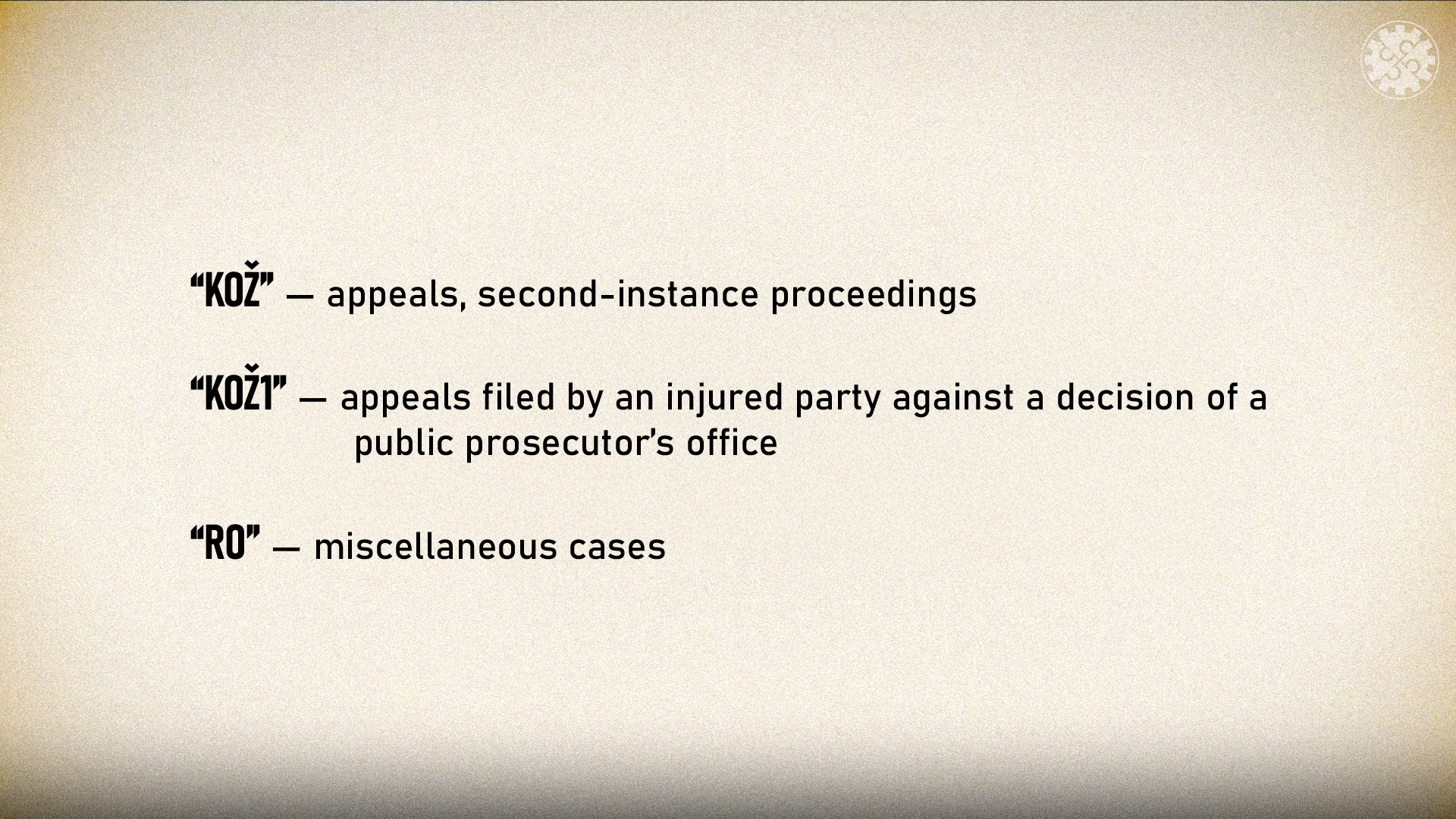
The oversight found that Article 22 of the Rulebook on Internal Operations of Prosecutor’s Offices had not been respected. The provision clearly requires that a public prosecution officer confirm receipt of a submission with an official receipt stamp.

“In all controlled cases involving judgments and decisions received from the Skopje Court of Appeal, there is no receipt stamp, and the date of receipt is noted by hand,” states the oversight report on the work of the Skopje Higher Public Prosecutor’s Office, obtained by IRL.

The oversight also uncovered deficiencies in the registration and assigning of cases in the KOŽ and KOŽ1 registers. Under the rulebook, cases must be recorded on the same day they are received. If the volume of submissions makes this impossible, registration must take place the following day—before the new incoming mail begins to be logged.

Instead, inspectors found that cases remained unregistered for days. The report states that Articles 22, 30, and 35 of the Rulebook on Internal Operations of Prosecutor’s Offices were violated.

“Failure to comply with Articles 22, 30, and 35 of the Rulebook on Internal Operations of Public Prosecutor’s Offices creates the possibility for improper allocation of cases among public prosecutors,” the oversight document concludes.

One of the report’s most consequential findings concerns irregularities in case allocation. In several instances, the prescribed schedule for case allocation—set by the annual work plan—was not followed.

Under the established system, cases must be registered sequentially. Each high prosecutor is assigned a Roman numeral, and cases are assigned in strict order, from the lowest number to the highest. The system is designed to eliminate discretion and prevent manipulation. The oversight, however, found evidence that this order had been altered.

“In the area of case allocation, there are situations where the Roman numeral of the public prosecutor to whom the case was assigned is crossed out and replaced with the number of another public prosecutor, without any explanation in the remarks column,” the oversight document on the operations of the Skopje Higher Public Prosecutor’s Office states.

The Prosecutor Behind Roman Numeral II

Prosecutors in the Higher Public Prosecutor’s Office Skopje, follow a formal rotation system for receiving cases. According to this schedule, cases are distributed sequentially through the administrative services responsible for registering and assigning them. Each high prosecutor is identified by a Roman numeral assigned for the current year — an internal designation that determines the order in which cases are allocated. Part of the oversight conducted in the Higher Public Prosecutor’s Office Skopje focused precisely on this mechanism: how cases were registered and whether the procedures prescribed in the rulebook had been respected.

After the initial oversight identified shortcomings in the registration of cases, the then State Public Prosecutor, Ljupco Kocevski, instructed the prosecutors conducting the oversight to prepare an additional report. The aim was to conduct a more detailed examination of the work of the high prosecutors in Skopje and the decisions they had taken.

The additional review analyzed 39 cases from 2023 and 2024 in which high prosecutors had either withdrawn an appeal or abandoned an indictment. In 35 of those cases, the review found procedural deficiencies. In four cases, the findings indicated elements of a criminal offense in the actions of a high public prosecutor.

“During the oversight, it was determined that when withdrawing appeals or dropping charges in some cases, official notes and instructions were not prepared for the basic public prosecutors, and in some cases the high public prosecutor was not notified of the intention to withdraw the appeal,” the review concluded. 

The purpose of this oversight was to determine whether high public prosecutors had acted lawfully, professionally, and competently when withdrawing appeals or charges. The four cases selected for additional scrutiny raised particular concern among members of the supervisory commission. All four had been assigned to the prosecutor identified by Roman numeral II — Jovan Cvetanovski — at the time the deputy head of the office led by Mustafa Hajrullahi. In each of these cases, Cvetanovski either withdrew the charges or abandoned the appeal.

Justice Obstructed

The four cases examined were: the long-running “Postal Bank” case; the construction of villas in the Skopje village of Zelenikovo by former television editor Dragan Pavlovik-Latas and his two brothers, known as the “Trevnik” case; the “Serta” case concerning tenders for cleaning government institutions; and another seemingly routine case involving the serving of alcohol to a minor in Negotino.

In all of them, the proceedings before the Skopje Court of Appeal were represented by the same prosecutor — Jovan Cvetanovski, the prosecutor behind Roman numeral II. These cases were precisely the ones singled out for additional examination on November 18 and 19, 2024.


Hajrullahi and Cvetanovski: “We are being Targeted to Silence the SPO Bonus Scandal”

When IRL confronted the former head of the Higher Public Prosecutor’s Office Skopje, Mustafa Hajrullahi, with details from the oversight report and statements from five female employees who alleged he pressured them to register cases contrary to the Rulebook, he rejected both the findings and the accusations. Hajrullahi denied abusing his position or directing which prosecutor should receive specific cases.

“If there had been such abuse, Kocevski would have taken other measures. This is only being used as a cover to remove me from that prosecutor’s office and to sweep away all the other cases from the former SPO. Tell me, you follow all the events—did all this happen because of the bonuses in the SPO?” Hajrullahi told IRL.

Hajrullahi also questioned the composition of the oversight team itself. In particular, he objected to the participation of prosecutor Lile Stefanova, who had represented the “Postal Bank” case during her time in the former Special Public Prosecutor’s Office. According to Hajrullahi, this meant she effectively supervised a case in which she had previously been involved. However, the oversight of the “Postal Bank” case examined only the actions of prosecutor Jovan Cvetanovski—specifically whether he acted professionally and lawfully when he withdrew the appeal. The oversight did not reassess the evidence or testimony in the case, which are matters for the court.

“Lile Stefanova acted in the first instance in the ‘Postal Bank’ case. And the same prosecutor comes to supervise the same case—her own work. Tell me, is that normal?” Hajrullahi told IRL. He added that, according to his belief, only the prosecutor Dzhelal Bajrami—also a member of the oversight team in the HPPO Skopje—had credibility.

Asked how the cases “Postal Bank,” “Trevnik,” “Serta,” and the case involving serving alcohol to a minor were all registered under Roman numeral II, meaning they were allocated to prosecutor Jovan Cvetanovski, Hajrullahi said he had the authority under the Rulebook—specifically Article 35—to allocate cases to prosecutors. However, he insisted that he could not influence their decisions, whether he would drop the appeal or withdraw from the indictment as in the four specific cases, once a case had been assigned.

“How could I tell Jovan Cvetanovski what decision to make?” Hajrullahi questioned. 

In a written response to IRL, prosecutor Jovan Cvetanovski stated that the allocation of cases is governed by the Rulebook on Internal Operations in Prosecutor’s Offices and carried out by administrative services, which register the cases and assign them to prosecutors.

“The way the services registered them and according to what principles, I do not know, nor was that within my competence,” Cvetanovski wrote. 

As Hajrullahi’s deputy, he said he had never heard of civil servants in the Higher Public Prosecutor’s Office Skopje complaining about pressure from their superior regarding the allocation of cases.

“For nine years as a prosecutor in the Higher Public Prosecutor’s Office Skopje, I did not observe any deviant behavior among the employees or between the employees and Mustafa Hajrullahi. On the contrary, throughout the entire period I witnessed professional interpersonal relations, particularly between them,” Cvetanovski added.

He claims that no cases were steered to him and that every decision he made was independent and autonomous.

“I state responsibly that no one steered cases to me, because there would have been no motive to do so, and I also claim responsibly that, as in hundreds of other cases, I acted lawfully in these proceedings. As a high public prosecutor, I analyzed the cases from all aspects, which is my competence, and I made decisions that I stand behind—now and in the future,” Cvetanovski said. 

In his detailed response to IRL, Cvetanovski also pointed to what he described as the root of the tensions inside the Higher Public Prosecutor’s Office Skopje: the case concerning bonuses in the former Special Public Prosecutor’s Office, on which he had worked. Like Hajrullahi, he argued that Lile Stefanova should not have been involved in supervising the “Postal Bank” case because of her previous role in the SPO.

“By deliberately assembling a working group that includes Lile Stefanova—who has a conflict of interest because she is part of the SPO bonus cases—she is effectively supervising her own case. Using her current position, with an insidious and unlawful approach to her work, she intervenes and through alleged oversight attempts to present my work as illegal, which would ultimately lead to a challenge to my decision regarding the SPO bonuses,” Cvetanovski wrote. 

Both Mustafa Hajrullahi and Jovan Cvetanovski maintain that the extraordinary oversight at the Higher Public Prosecutor’s Office Skopje—where they served as head and deputy head—was triggered by their decision to resolve the case involving bonuses in the former SPO through a prosecutorial decision, rather than closing it as the Prosecutor’s Office for the Prosecution of Organized Crime and Corruption had done on two previous occasions.

Sashka Cvetkovska

Sashka Cvetkovska

Еditor-in-chief

Sashka Cvetkovska is an internationally awarded investigative journalist and editor-in-chief of the Investigative Reporting Lab. Cvetkovska has worked on a number of national and cross-border investigations that have uncovered domestic and international crime, corruption, illicit arms trafficking and disinformation wars. The research she has worked on has been published in The Guardian, Buzzfeed, Süddeutsche Zeitung and others. Her current responsibilities are focused on increasing the impact of investigative reporting by creating new narratives of stories through film and campaigns. In that direction, she currently holds the position of producer of the Investigative documentary series Newsroom. For ten years, Cvetkovska has been part of the research team of the International Organized Crime and Corruption Reporting Project, an international media organization associated with IRL. She was a member of the Board of Directors of OCCRP and the Association of Journalists of Macedonia.

Elena Mitrevska Cuckovska

Elena Mitrevska Cuckovska

Editor for Development and Operations

Elena Mitrevska Cuckovska is the co-founder of IRL and together with the editor and his assistant, is responsible for monitoring and designing the implementation process of IRL activities. She is the project director of the documentary series Newsroom. She has been working with journalists for more than 10 years and has also worked on other technological solutions that allow more efficiency when searching public databases used by our reporters in order to make their work faster. She is a software engineer and graphic designer by profession and she is also the first technology expert who is trained and works in the field of media. She is part of the cross-border group of technological experts of OCCRP and contributes in collecting and analyzing information and as a researcher in IRL.

Bojan Stojanovski

Bojan Stojanovski

Editor and journalist

Bojan Stojanovski is a graduated journalist with over ten years of media experience. He worked in several national televisions – TV Alfa, TV 24 Vesti and TV Alsat. From first of November 2021, he is a part of the IRL team. Throughout his career, Stojanovski followed topics in the field of judiciary, crime, corruption. In 2013, he received “Nikola Mladenov” award for investigative journalism, on the topic “Employment in the public administration through the party list”.


Denica Chadikovska

Denica Chadikovska

Assistant managing editor for organization and communications

Denica Chadikovska is a graduated psychologist who started her journalistic career in 2017 as co-author and co-producer of the youth show Krik, funded by the UK Government. Chadikovska becomes part of the IRL team in 2018 as an investigative journalist – intern within the project for training future media leaders. In June 2020, she joins the position of communications officer in charge of implementing the IRL’s communications strategy as part of the communications and products team.

Maja Jovanovska

Maja Jovanovska

Researcher and journalist

Maja Jovanovska has a degree in journalism and follows topics in the field of corruption, crime and justice. In her long-term career, she worked in numerous media such as A1 television, Channel 5 television, Alsat and the NOVAtv portal before joining the founding board of IRL in 2018. She is the winner of domestic recognitions and awards and has participated in a number of trainings and conferences in the field of investigative journalism. She was a member of the management of the Independent Union of Journalists and Media Workers of Macedonia and the Council of Ethics in the Media in Macedonia, and is currently part of the management of ZNM.


Aleksandra Denkovska Gocevska

Aleksandra Denkovska Gocevska

Researcher and journalist

Aleksandra Denkovska Gocevska is a graduated journalist with ten years of experience. She worked in the daily newspaper Nova Makedonija, the Meta.mk news agency and the NOVATV portal. During her career, she worked on topics from the field of politics, urbanism, judiciary and corruption. She started working with investigative journalism in 2015 when she came to work as a reporter in the investigative newsroom of NOVATV. She is a participant in dozens of conferences and workshops on investigative journalism and is the author of the first undercover investigative story in Macedonia about the lives of the children from the May 25 home.

Aleksandar Janev

Aleksandar Janev

Researcher and journalist

Aleksandar Janev is a graduated economist who began his career as an economic journalist in 2008 at Alfa Television. He developed his professional reporting skills through training sessions with top economic journalists both domestically and abroad, including at Reuters in the United Kingdom. In 2010, he transitioned to the print media at Capital, where he worked until 2022. Concurrently, he contributed regularly to the Balkan Investigative Reporting Network (BIRN), and since 2018, he has been both an author and editor for the TV program “Agenda 35” broadcasted on Macedonian Radio Television. Since 2023, he has been a part of the IRL team focusing on corruption and economic crime.

Ivan Blazhevski

Ivan Blazhevski

Researcher and journalist

Ivan Blazhevski is a journalist specializing in international relations, crime, and corruption. He has been working as a journalist since 1998, and since 2001, he has been an editor and correspondent for the Spanish state news agency EFE covering Macedonia, Albania, and Kosovo. Throughout his extensive career, Blazhevski has contributed to numerous media outlets such as Makpress, Agence France-Presse (AFP), Vecer, Dnevnik, Vreme, and Radio Free Europe, serving as editor for news and documentary programs at TV ALSAT for 18 years. He joined the team at IRL in 2024. Blazhevski has been honored with an investigative journalism award from the Macedonian Institute for Media (MIM) and has produced television programs in multiple countries and regions, including Japan, Greenland, Bolivia, China, Nepal, Bangladesh, East Africa, Cuba, Peru, Denmark, Italy, Germany, among others.

Pelagija Mladenovska Stojančova

Pelagija Mladenovska Stojančova

Researcher and journalist

Pelagija Mladenovska Stojančova is a journalist with over 16 years of experience in the media industry. She began her career at the daily newspaper “Shpic” in 2008 and later worked at the weekly “Sega”. Since 2009, she has been part of the team at Radio Free Europe’s Macedonian language service, reporting on politics, crime, corruption, and economics across various media platforms. Since 2024, she has been employed at IRL as an investigative journalist. She holds a degree from the Faculty of Philosophy and continued her education at the School of Journalism at the Macedonian Institute for Media (MIM). Throughout her career, she has been involved in projects focused on educating and mentoring young journalists.

Luka Blazev

Luka Blazev

Graphic designer

Luka Blazev is a graphic designer at IRL who becomes part of the team in 2019. His career in the field of graphic design and art began in 2017 by working on several projects for various domestic and foreign companies. At IRL, Blazev is in charge of finding graphic solutions for the research and for the design of the promotional content resulting from the research, which follows the communication strategy of IRL.

Trifun Sitnikovski

Trifun Sitnikovski

Director of "Newsroom"

Trifun Sitnikovski has been working in the film industry for more than a decade. He has shot more than a dozen short action films, short documentaries and three TV series on which he worked as screenwriter, director and executive producer. In addition to directing films, he has also worked on numerous projects as a producer, editor, cinematographer, assistant director and script supervisor for short films, TV shows, documentaries, commercials and music videos. His latest project as a director and screenwriter is the documentary series “Newsroom”.

Trajce Antonovski

Trajce Antonovski

Cinematographer

Trajce Antonovski is a cameraman and part of the cinematographers of the documentary series Newsroom. Antonovski has been working for more than 10 years on the visual realization of sports competitions under the auspices of UEFA and EHF. He worked in the newsroom of A1 and the NOVATV portal, and was part of the team for the realization of the political shows “Eurozum”, “Provereno”, as well as numerous entertainment projects such as the popular quiz “Who wants to be a millionaire”, “50-50 ” and other projects. In IRL Macedonia, he is part of the team in charge of filming the stories.

Gorjan Atanasov

Gorjan Atanasov

Video editor and producer

Gorjan Atanasov is a film and TV video editor with more than 8 years of experience in the film and television industry. Atanasov has worked on several features and documentary projects. As an editor, he has signed 6 short feature films, 2 feature-length documentaries, and currently he works in IRL as a video editor for the documentary series “Newsroom” and short video stories and multimedia projects of the organization.

The “Postal Bank” case dates back more than two decades. For just as long, investigators have examined the privatization of the country’s first state bank. The case was reopened in 2018 by the then Special Public Prosecutor’s Office (SPO). After the dissolution of the SPO, however, the case was transferred to the Prosecutor’s Office for the Prosecution of Organized Crime and Corruption.

On June 13, 2024, the Criminal Court in Skopje halted the proceedings, citing the controversial amendments to the Criminal Code adopted by the government of SDSM and DUI. The case had been conducted against businessman Tome Glavchev, current president of the Basketball Federation of Macedonia; Ratko Dimitrovski, former mayor of Kochani from VMRO-DPMNE; and the lawyer Zoran Shuklev.

They were prosecuted on charges of abuse of official position and money laundering. The oversight established that the Criminal Court’s decision did not specify under which article of the Criminal Procedure Code the proceedings had been terminated.

The Prosecutor’s Office for the Prosecution of Organized Crime and Corruption, dissatisfied with the ruling, filed an appeal, arguing that Glavchev, Dimitrovski, and Shuklev should at minimum face accountability for the offense of money laundering.

However, High Public Prosecutor Jovan Cvetanovski waived the right to pursue the appeal before the Court of Appeal. He justified this decision through an official note, yet the oversight concluded that the reasons given for withdrawing the appeal were contradictory and unclear.

“Public Prosecutors Lile Stefanova and Elvin Veli believe that by withdrawing the appeal of the Basic Public Prosecutor’s Office for the Prosecution of Organized Crime and Corruption, the public prosecutor from the Higher Public Prosecutor’s Office Skopje did not act professionally, expertly and legally,” the report states.

Prosecutor Dzelal Bajrami, however, assessed that Cvetanovski had acted within his competencies. With the appeal withdrawn, the Court of Appeal no longer had the opportunity to consider the case. The proceedings were effectively closed.

The second case concerns illegal construction in the village of Zelenikovo involving Dragan Pavlovik-Latas and his two brothers, Zvezdan and Srdzan Pavlovik. On July 4, 2019, the Criminal Court acquitted them of all charges. The same verdict was reached again during the retrial on July 18, 2022.

The Public Prosecutor’s Office in Skopje filed an appeal. On October 10, 2023, the appeal was accepted and a hearing was scheduled before the Skopje Court of Appeal. On November 6, 2023, the case was formally presented at the Public Prosecutor’s Office. Present at the session were the then State Public Prosecutor Ljubomir Joveski, public prosecutors Ferat Elezi and Sonja Simovska, and high public prosecutors Mustafa Hajrullahi and Jovan Cvetanovski.

“The conclusion from the presentation was that the public prosecutor representing the case at the Court of Appeal should propose commissioning an expert examination to determine whether the actions taken in the construction works constituted preparatory acts and to establish the date when construction began. An expert witness should be summoned to the main hearing to clarify the open questions,” the oversight report from the Skopje Higher Public Prosecutor’s Office states.

The very next day, the defense for the Pavlovik brothers submitted a new piece of evidence to the Court of Appeal — an expert report and opinion prepared by a defense-appointed expert witness. Cvetanovski requested that the hearing be postponed so he could cross-examine the expert. However, according to the oversight findings, what followed raised serious concerns.

“The public prosecutor at the hearing did not ask the questions he had previously announced in the record from November 7, 2024, and the questions that were posed did not elicit answers from the expert on the disputed issues raised during the presentation before the Public Prosecutor’s Office of the Republic of North Macedonia,” the report states.

Cvetanovski also failed to follow the instructions issued during the internal prosecutorial meeting at the prosecution office to commission an independent expert examination. Instead, he accepted the expert report submitted by the defense.

“The public prosecutor acted contrary to Article 37 of the Rulebook on Internal Operations of Public Prosecutor’s Offices, according to which the position and opinion adopted after the presentation are binding for the lower public prosecutor’s office,” prosecutors Lile Stefanova and Elvin Veli wrote in the oversight report.

However, the third member of the supervisory commission, Dzelal Bajrami, disagreed. He concluded that Cvetanovski had acted in accordance with the conclusions adopted during the presentation at the internal prosecutorial meeting.

The third case examined during the oversight concerns the “Serta” case, involving public tenders for cleaning government institutions. The case reached the Higher Public Prosecutor’s Office after the Basic Public Prosecutor’s Office filed an appeal against a decision of the Criminal Court.

When reviewing the indictment, the Criminal Court accepted the objections raised by the accused Spaso Gjorgiev and the company “Serta,” who were prosecuted for abuse of procedures in a public procurement call. On January 29, 2024, the Basic Public Prosecutor’s Office appealed that decision.

It was in connection with this case that a report emerged of pressure being exerted on an official at the Skopje Higher Public Prosecutor’s Office responsible for registration and allocation of cases. According to her testimony, she received instructions from the then head of the Higher Prosecutor’s Office, Mustafa Hajrullahi, indicating which prosecutor should be assigned to the case.

“For the ‘Serta’ case, I was told to register it and assign it to public prosecutor Jovan Cvetanovski,” said Daniella Lape, an employee in the Skopje Higher Public Prosecutor’s Office. Her testimony is included in the oversight report.

At the Court of Appeal hearing on April 9, 2024, high prosecutor Cvetanovski withdrew the appeal.

“An inspection of the official note dated April 9, 2024 shows that the public prosecutor analyzed the evidence attached to the indictment, which is contrary to the provisions of the Criminal Procedure Code, Articles 336 and 337, given the stage of the proceedings in which the case was at the time,” the oversight report states.

This interpretation is consistent with the Supreme Court's legal opinion issued on December 7, 2021, which states that the Council responsible for reviewing an indictment does not analyze the evidence or assess its quality. Its role is limited to determining whether evidence has been obtained unlawfully — an issue that should have been the focus of Cvetanovski’s argument.

“A judgment of the Supreme Court of the Republic of North Macedonia was issued in this case on September 11, 2024. In that ruling, the court established a violation of the law in favor of the defendants. The judgment further states that the violation committed by the Council reviewing the indictment could have been remedied if the high public prosecutor had not withdrawn the appeal,” the oversight document notes.

In their conclusions regarding this case, the public prosecutors Lile Stefanova and Elvin Veli wrote that by withdrawing the appeal, prosecutor Cvetanovski did not act professionally, competently, or in accordance with the law. They further stated that he engaged in an analysis of evidence and the existence of intent to commit a criminal offense — matters that fall within the exclusive authority of the court. Nevertheless, the public prosecutor Dzelal Bajrami again took the position that Jovan Cvetanovski had acted within the scope of his authority.

The fourth case selected for additional scrutiny also involved the prosecutor assigned Roman numeral II — Jovan Cvetanovski. At first glance, it appeared routine: a case concerning the illegal serving of alcoholic beverages to a minor.

The court in Negotino found Gjorgji Lazov, Ilija Vangelov, and the company DPTU “S.O.S. Obezbeduvanje (Security)” DOO Negotino guilty. The defendants challenged the verdict, filing an appeal that moved the case to the Higher Public Prosecutor’s Office in Skopje.

On February 3, 2023, the Skopje Court of Appeal overturned the ruling and returned the case for retrial. Prosecutor Jovan Cvetanovski did not attend the public hearing at the appellate court, despite the fact that the Higher Prosecutor’s Office in Skopje had previously concluded that the defendants’ appeals were unfounded.

On May 8, 2023, the court in Negotino issued a new verdict, again finding the defendants guilty. The defendants once more appealed the decision.

“On August 23, 2023, the public prosecutor at the Higher Public Prosecutor’s Office in Skopje, Jovan Cvetanovski, submitted a written proposal KOŽ.no. 1187/23 to the Skopje Court of Appeal, proposing that the defendants’ appeals be rejected as unfounded,” the oversight report states.

In that submission, Cvetanovski argued that the retrial had been conducted in accordance with the appellate court’s instructions and that the deficiencies identified in the initial proceedings had been fully addressed.

Yet only months later, his position shifted.

“At the hearing on 26 December 2023, the public prosecutor withdrew the indictment. From the review of the Skopje Court of Appeal’s judgment, it is evident that no new evidence was presented during the hearing and nothing altered the factual situation compared to the moment when the written proposal had been submitted,” the oversight report notes.

On the same day — December 26, 2023 — Cvetanovski drafted an official note stating that he had withdrawn the indictment because there was insufficient evidence to support the criminal offense.

The three prosecutors who conducted the oversight — Lile Stefanova, Elvin Veli, and Dzhelal Bajrami — reached a rare point of consensus regarding this decision. In earlier cases examined during the oversight, Bajrami had taken the view that Cvetanovski’s actions fell within his legal authority. In this instance, however, he concluded otherwise.

“Public prosecutors Lile Stefanova, Elvin Veli and Dzhelal Bajrami believe that, taking into account the written proposals in both proceedings and the positions expressed in them, and in a situation where no new evidence was presented at the main hearing, by dropping the indictment the public prosecutor did not act professionally, expertly and legally,” the oversight report states.

Despite this joint assessment, the 20-page oversight report ultimately carried only two signatures — those of Lile Stefanova and Elvin Veli.Dzhelal Bajrami did not sign the document, which was later submitted to then–State Public Prosecutor Ljupco Kocevski.

Attached to the report were Bajrami’s own official note, as well as a separate report from five employees describing how Mustafa Hajrullahi, while serving as head of the office, allegedly pressured them over the registration and allocation of cases within the Higher Public Prosecutor’s Office in Skopje.